

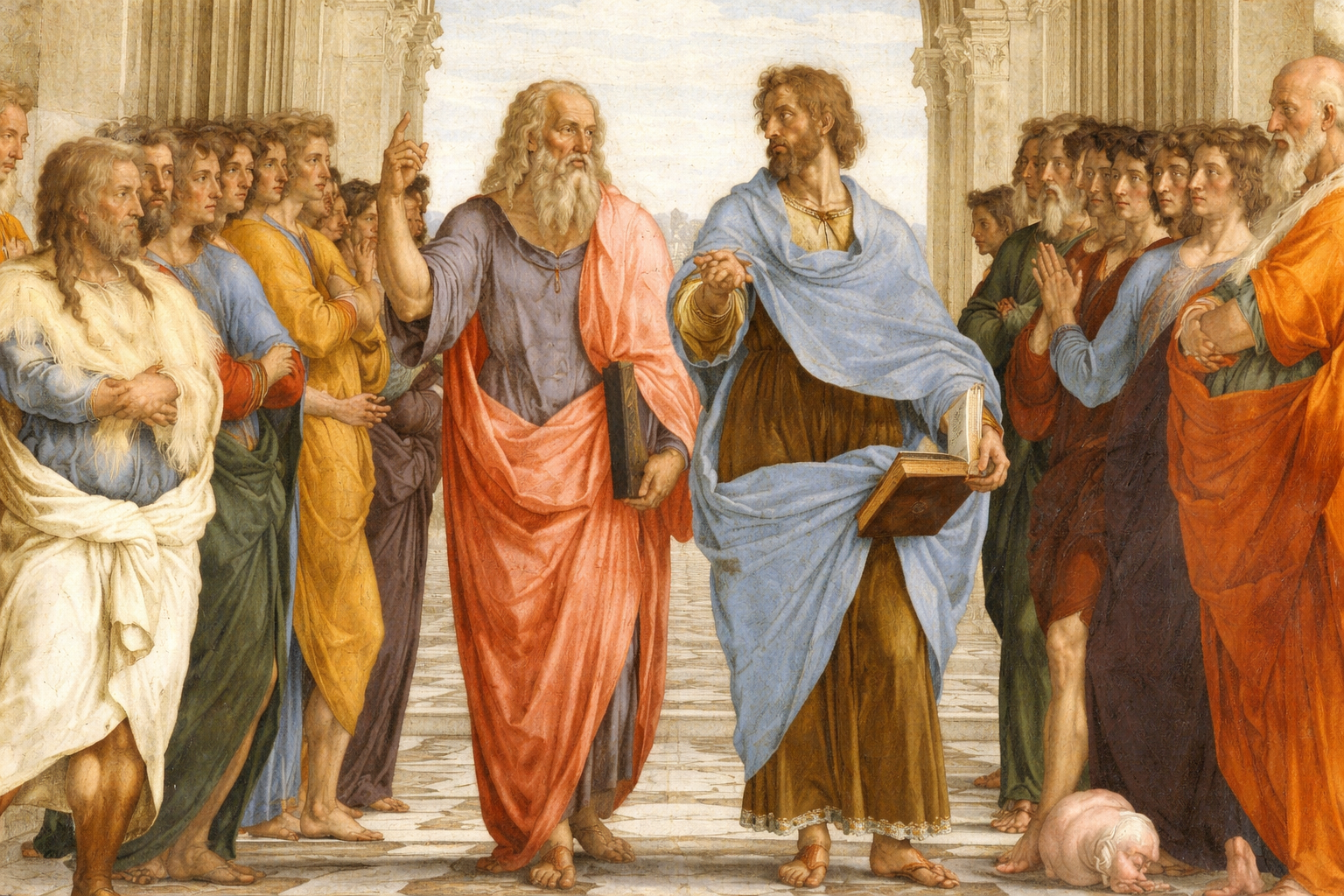
What Schools Are For: Knowledge, Not Just Skills
I’ve been circling a simple but stubborn question for a while: what does it actually mean to “build knowledge” in a way that leads not just to skills, but to understanding, progress, and truth-seeking? That question took me, somewhat unexpectedly, into the work of the economic historian Joel Mokyr and the intellectual culture of early modern Europe.

On Silence and Moral Responsibility
In 1867, John Stuart Mill warned that moral responsibility belongs not only to nations, but to every person whose opinions shape public sentiment. Reflecting on a year marked by both ordinary joy and a disturbing normalization of antisemitism, I consider what it means to refuse the comfort of looking away, and why silence, in public life, is never quite neutral.

What Joe Rogan and Ken Burns Taught Me About Teaching History
Not long ago, I found myself unexpectedly drawn into a nearly three-hour conversation between documentary filmmaker Ken Burns and podcaster Joe Rogan - two figures you might never expect to inform K–12 schooling. But what struck me wasn’t the celebrities themselves; it was what their audiences reveal about learning. In a world captivated by short-form content, millions still seek depth, nuance, and sustained engagement with big ideas.
That’s the same hunger I saw in classrooms implementing knowledge-rich history instruction.

From NAEP Data to Real Classrooms: What Louisiana Taught Me About Reading Improvement
This year’s NAEP results were mostly sobering. Nationally, reading scores remain stubbornly low. But when I looked more closely at the data, a small group of Southern states stood out — particularly Louisiana and Mississippi, which posted reading gains even after adjusting for poverty and other demographic factors.
That data point sent me back to something more concrete: classrooms.
In April, I spent time in northeastern Louisiana visiting elementary schools

The Lottery
Campus protests are doing little to repair the image of elite colleges as hothouses for illiberal thought, serving mostly wealthy students. While admitting qualified kids by lottery would not solve all their challenges, it could introduce viewpoint diversity that restores their authority and helps heal our divided nation. As Dave Leonhardt wrote last fall, “In our polarized country, increasing the economic diversity of elite colleges … is a rare idea on which the political left, center and right agree.”

No Man is Above the Law
Preparing for an oral history of Anderson Country Tennessee, Rachel Martin was struck to find no mention of a tumultuous school desegregation battle that took place in Clinton over the summer of 1956 in her university archives. In A Most Tolerant Little Town, she explains how everyone came to ‘forget’ about an important fight that preceded the integration of Central High School in Little Rock. Martin’s retelling highlights the role of three town leaders who put their respect for the law above their personal beliefs, at great personal peril.


End the College Admissions Essay Now
About a century ago, to stop “a Jewish inundation,” Harvard added an essay to their application. Eliminating it would be a concrete sign of contrition, and a signal to elite schools to find less discriminatory ways to build diverse classes.
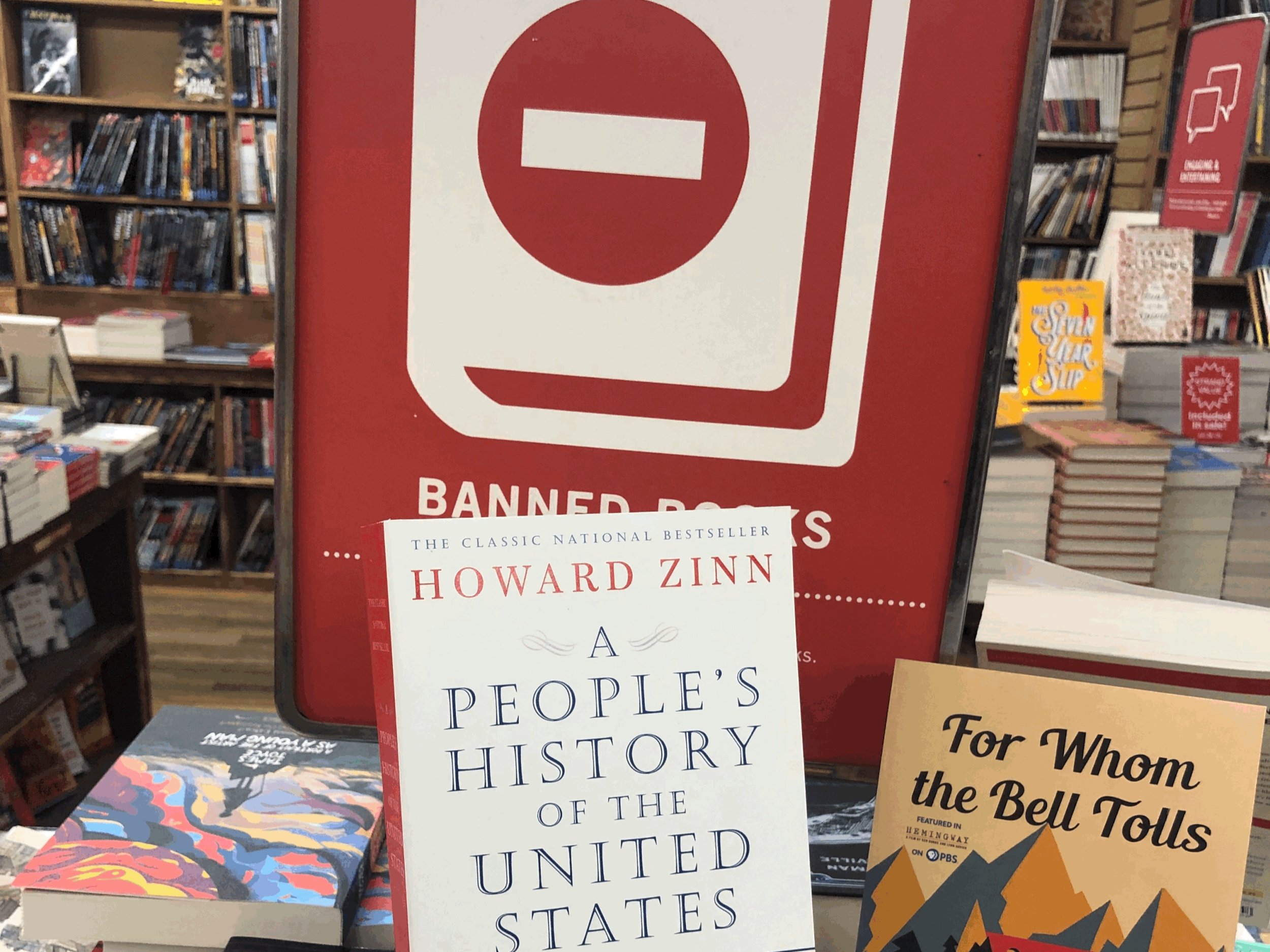
Banning Books
Books bans aren’t the threat that self-serving advocates claim. Far more worrying is a world where kids can’t read - at least not well - and worse yet, don’t even find reading valuable. You can’t be harmed by a controversial idea in The Bluest Eye or Lolita if you can’t read it.

Aiming too high?
David Steiner’s “A Nation At Thought” suggests American education needs to aim higher. Demanding standards are important but how we get there matters just as much. Steiner offers scant guidance.

Through A Mirror, Darkly
Zipping from New York to Geneva to Moscow and beyond, Jay Newman’s debut novel works pretty well as a high finance thriller. Planes, guns, sex and of course money abound. Perhaps more importantly, the author raises existential questions about the state of our democracy. Not the least of which is why a successful Wall Street insider is asking them.

All About The Benjamins?
When we equate success with wealth we sell our students short. We all want a roof over our head and sufficient food, and more just policies could make that possible for more people. But money need not define us, or make us who we are. What matters is what you are inside.

Building from the Core
Rescuing Socrates, Roosevelt Montás’s memoir-cum-paean to the classics, is a timely and much-needed Revelation. In an era when dismissing the canon signals a concern for the less privileged, Montás argues that restoring the great writers and thinkers to the pantheon is critical. “Far from a pointless indulgence for the elite,” he writes, “liberal education is, in fact, the most powerful tool we have to subvert the hierarchies of social privilege that keep those who are down, down.”

A Few Book Reviews
In October I reviewed two books that merit the attention of readers concerned with education reform. Both are well written and the authors’ contentions are worthy of broader consideration.

On Columbus
By our more humane, modern standards it’s a curious choice to honor Italian Americans with a holiday named after Colombus. But repurposing his day to acknowledge the indigenous inhabitants who suffered from European colonization doesn't make much sense either.
Children and Adults
In an interesting essay about how, consent aside, sex deforms the teaching relationship, an Oxford professor observes her students are less mature, despite their intelligence and hard work.

Can the Canon make us humane?
We can learn much from the wisdom of our elders, but the lessons of the past offer a special opportunity to perfect our character by seeing where others have failed, and succeeded. The rhetorical fluency gained from the humanities is a nice bonus, but not the main prize.
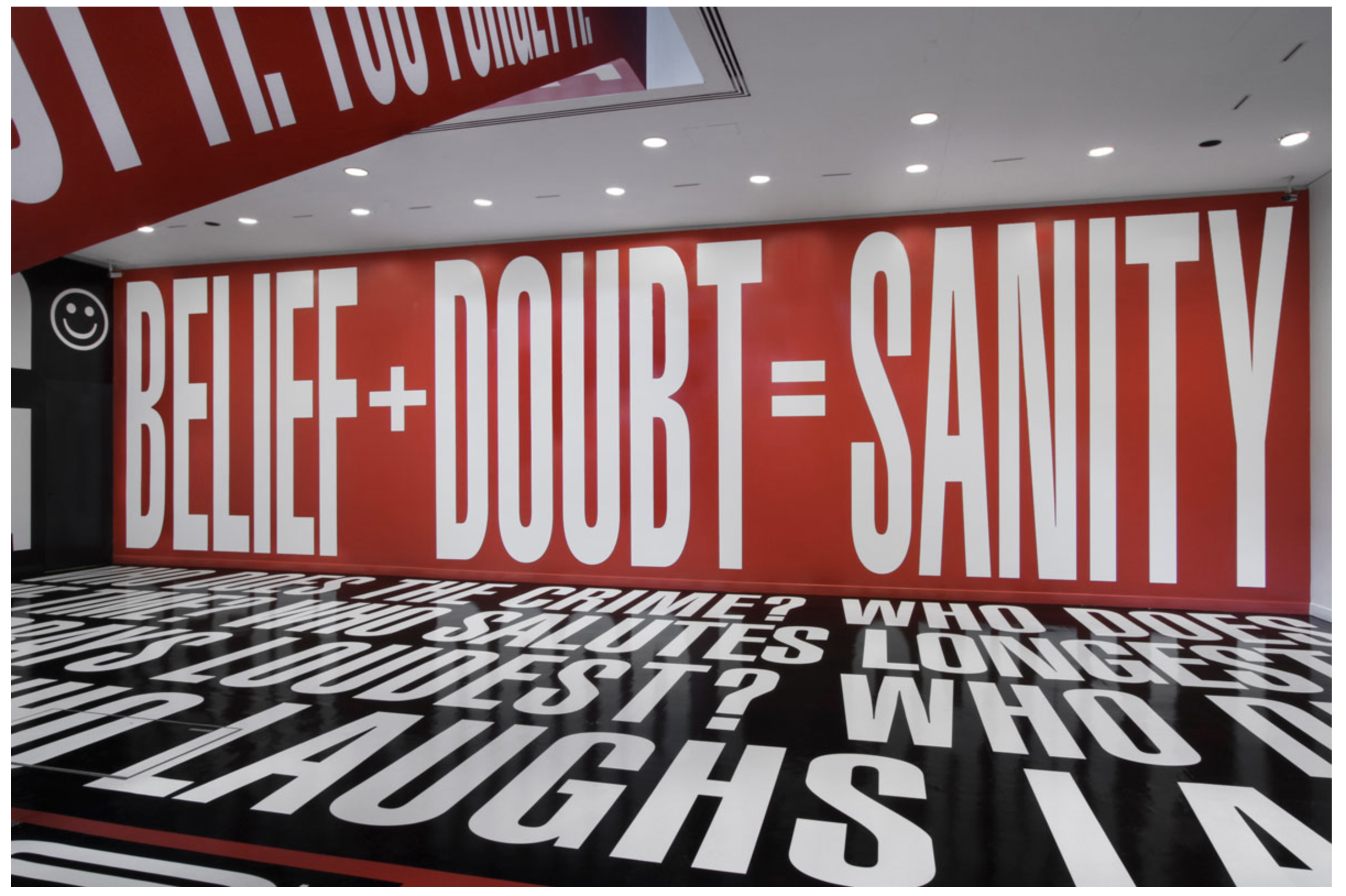
Seeking Truth
Sanity seems to be in ever shorter supply lately, but this is a challenge that’s been brewing for a decade, if not decades. Schooling should build students’ knowledge so they can think critically, but it’s not working.

Can A.I. Make us Moral?
Skills-based education is inevitably of limited duration as technology is ever seeking for ways to replace labor with capital. But AI will not teach us how to live a virtous life, and that’s where our schools can future-proof their students.

Wanted: Graduates from the School of Hard Knocks
Electing more representatives from the School of Hard Knocks won’t halt the elite cultural arms race. We need programs that create more equality of opportunity, not just plans to send more kids to college.